

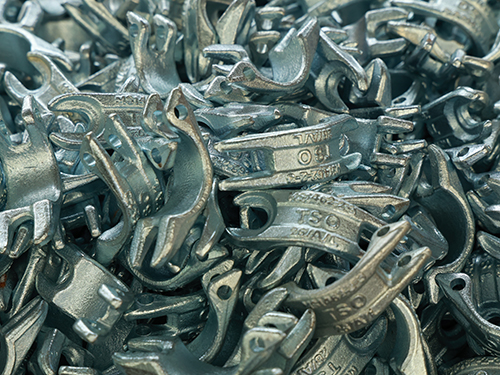
Joint Pin Coupler
Joint Pin Coupler, also named spigot coupler or inner sleeve coupler, is special inline splicing fitting for tube‑and‑clamp scaffolding systems. It inserts into inner bore of two aligned scaffold tube ends to realize butt‑joint connection, extending vertical standards to achieve higher erection height. Drop‑forged and pressed steel versions are both available; forged type delivers higher shear strength for heavy‑duty sites, while pressed version provides cost‑effective solution for general construction projects. Each unit is inserted inside two abutting scaffold tubes, keeping tubes co‑axially aligned and transferring compressive load along tube axis, applied for erecting facade scaffolds and heavy‑load shoring towers without modifying original building structures. Premium Q235 carbon steel is adopted as raw material. Material test certificates and batch inspection documents can be supplied for export orders.
Multiple surface anti‑corrosion treatments are optional for joint pin coupler. Hot‑dip galvanizing forms compact zinc‑iron alloy protective layers covering whole pin surface. This treatment delivers stable resistance against rainwater, humid air and salt‑fog erosion, suitable for long‑term outdoor, coastal and offshore construction projects with high cyclic‑turnover frequency. Electro‑galvanizing provides thin zinc coating for short‑cycle projects under low‑corrosion environment. Powder coating and liquid paint coating are economical alternatives for temporary dry‑condition construction sites. Painted surfaces are not recommended for long‑term harsh working conditions, as paint layers tend to peel off under frequent mechanical friction and impact. Joint pin coupler mainly bears compressive load for tube butt‑joint connection. It shall not be used for tension‑bearing joints. Full insertion and proper locking prevent tube offset, and guarantee overall scaffolding framework stability.
Core dimensional parameters determine practical mechanical performance of joint pin coupler. Outer diameter of joint pin coupler must precisely match inner diameter of mating scaffold tubes. Pin length ensures enough insertion depth into both upper and lower tubes. Specification mismatch will cause local stress concentration and hidden safety hazards. Products comply with mainstream international standards including EN 74‑1, BS 1139 and CE requirements. Third‑party mechanical test reports and material certificates can be supplied upon customer request. Good interchangeability enables flexible assembly adapting to various site layout requirements.
Prior to factory delivery and on‑site deployment, visual inspection and sampling mechanical tests shall be carried out for each production batch. Visual examination covers coupler body cracks, permanent deformation and surface coating peeling. Reused joint pin couplers require stricter inspection standards. Even with intact outward appearance, invisible metal fatigue may accumulate after repeated heavy‑load cycles and cannot be judged merely through surface observation. Sampling compression tests verify ultimate bearing capacity and anti‑deformation performance. Joint pin couplers with body fracture and structural damage must be screened out and prohibited for delivery or site usage. Secondary destructive modification including arbitrary cutting, welding and hole‑drilling on finished joint pin couplers is strictly forbidden. Unauthorized alteration will destroy original mechanical properties and greatly reduce joint safety performance.
Joint pin coupler supports cyclic repeated use. After project completion, dismantling work shall follow standard construction sequence. Cement mortar, dust and foreign residues attached on pin surface need thorough cleaning before next application. Impurities will cause assembly jamming and affect joint fitting performance in subsequent service cycles. Finished joint pin couplers shall be stored in dry and ventilated warehouse areas, sorted and stacked by specification grade, avoiding long‑term rain soaking and direct contact with damp ground. Improper on‑site operations including adoption of damaged couplers, insufficient insertion depth and applying tension load on joint pin coupler may trigger tube dislocation and scaffolding collapse risks. As special internal splicing fitting for tube‑and‑clamp scaffolding, raw‑material quality, forging or stamping craftsmanship, finished‑product inspection and correct on‑site application of joint pin coupler directly affect site construction safety and long‑term service life, and constitute essential hardware guarantee for global building, civil infrastructure and industrial‑maintenance projects.
 BOLGS
BOLGS
-
How do adjustable screw jacks cooperate with scaffolding systems to improve construction precision?
2026-08-19 06:09:35
-
What pre-use inspection items are required for adjustable screw jacks?
2026-08-19 06:09:09
-
What international standards regulate exported adjustable screw jacks?
2026-08-19 06:08:32
-
How to maintain and recycle adjustable screw jacks for repeated use?
2026-08-19 06:07:48
CONTACT
WHATSAPP:+8618630740705
TEL:+8618630740705
Email:331314924@qq.com
Web:https://www.shanchenhardware.com
ADD:Xian County, Cangzhou, Hebei, China