

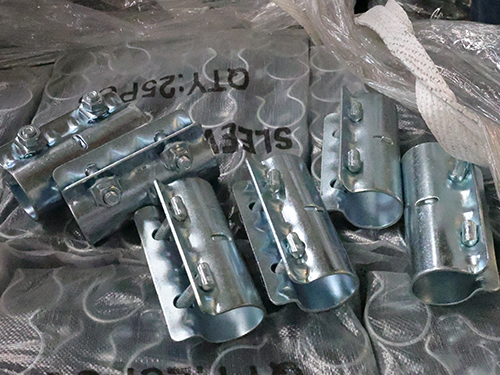
Scaffolding Fitting
Scaffolding Fitting is a general term for hardware accessories applied in tube‑and‑clamp scaffolding and frame scaffolding. Main product range includes forged and pressed couplers, joint pins, half couplers, base jacks, U‑heads, wall tie fittings and other auxiliary parts. Hot drop‑forged fittings possess compact metal grain structure, good shock resistance and high load capacity for heavy‑duty high‑safety construction sites. Pressed scaffolding fittings offer cost‑effective choices for ordinary construction projects. Each fitting undertakes specific functions such as tube butt‑splicing, cross‑connection, angle adjustment, height regulation and auxiliary fixing. Matched with steel tubes, these fittings construct building facades scaffolds, heavy‑load shoring towers and special‑shaped industrial surrounding frameworks without altering original building structures. High‑strength Q235 carbon steel serves as primary raw material. Material test certificates, third‑party inspection reports and batch inspection records can be provided for export orders. Most products fit 48.3 mm scaffold tubes, and customized sizes for 42 mm, 60.3 mm tubes are available to satisfy different regional market standards. Main production processes include hot drop forging, stamping, trimming, thread processing, rivet assembly and anti‑corrosion surface treatment. Strict in‑house quality control runs through the whole production process to remove defective pieces with cracks, deformation and thread damage. Custom logo stamping and seaworthy export‑grade packaging are available for bulk orders.
Multiple surface anti‑corrosion treatments are optional for scaffolding fitting. Hot‑dip galvanizing forms dense zinc‑iron alloy protective layers covering fitting bodies, clamping surfaces and threaded parts. This treatment provides excellent resistance against rainwater, humid air and salt spray, suitable for long‑term outdoor, coastal and offshore construction projects with frequent repeated use. Electro‑galvanizing supplies thin zinc coating for short‑term projects under low‑corrosion environment. Powder coating and paint finishing are economical alternatives for temporary indoor dry‑condition construction. Painted finish is not recommended for long‑term harsh‑condition sites, as paint layers easily peel off under friction and impact and may result in jamming of threads and moving components. Scaffolding fittings transfer structural loads via friction clamping, mechanical insertion or thread engagement. Operators shall follow standard torque requirements during installation. Proper tightening prevents component slippage and offset, reduces local displacement risk and secures overall scaffolding structural stability.
Core dimensional parameters determine practical mechanical performance of scaffolding fitting. Clamping aperture, thread specifications and insertion dimensions must accurately match the outer or inner diameter of supporting scaffold tubes. Dimension mismatch will produce local stress concentration and potential safety hazards. Our scaffolding fittings comply with widely‑accepted international standards including EN 74‑1, BS 1139 and CE requirements. Third‑party test reports on slip resistance and ultimate load capacity can be offered upon request. Good interchangeability allows flexible assembly for various site layout conditions.
Before factory delivery, visual inspection and sampling mechanical tests shall be performed for each production batch. Inspection items cover body cracks, permanent deformation, thread damage and coating peeling. Re‑used scaffolding fittings need more rigorous inspection standards. Even with intact appearance, invisible metal fatigue may accumulate after repeated heavy‑load cycles and cannot be identified only by visual check. Sampling slip‑resistance and compression tests verify ultimate load‑bearing capacity and anti‑deformation performance. Fittings with fracture, thread sliding and structural damage must be rejected and forbidden for site use. Any destructive secondary modification such as cutting, welding or drilling on finished scaffolding fittings is strictly prohibited. Unauthorized modification will impair original mechanical performance and greatly lower structural safety.
Scaffolding fittings support repeated cyclic usage. After project completion, dismantling shall follow standard construction procedures. Cement mortar, dust and contaminants on clamping openings, threads and contact surfaces should be thoroughly cleaned before re‑use. Residual dirt will cause assembly jamming and reduce locking force, negatively affecting fitting performance in subsequent cycles. Completed scaffolding fittings shall be stored in dry and ventilated warehouses, sorted by specifications, kept away from rain and damp ground. Improper site operations including using damaged fittings, insufficient tightening torque and over‑loading may cause component failure and scaffolding collapse risks. As indispensable metal hardware for temporary scaffolding structures, raw‑material quality, forging or stamping workmanship, batch quality control and correct on‑site application of scaffolding fitting directly influence construction‑site safety and service life, delivering reliable hardware support for global building, civil engineering and industrial‑maintenance projects.
 BOLGS
BOLGS
-
How do adjustable screw jacks cooperate with scaffolding systems to improve construction precision?
2026-08-19 06:09:35
-
What pre-use inspection items are required for adjustable screw jacks?
2026-08-19 06:09:09
-
What international standards regulate exported adjustable screw jacks?
2026-08-19 06:08:32
-
How to maintain and recycle adjustable screw jacks for repeated use?
2026-08-19 06:07:48
CONTACT
WHATSAPP:+8618630740705
TEL:+8618630740705
Email:331314924@qq.com
Web:https://www.shanchenhardware.com
ADD:Xian County, Cangzhou, Hebei, China