

Importing Scaffolding and Steel Props: Standards, Documents and Checks
Time:2026-09-23 18:20:47
Buying construction equipment from a factory three time zones away has one structural weakness: everything looks fine until the container arrives. Photographs do not reveal a shallow thread, a porous weld or a coating that is half the specified thickness. What protects an importer is not suspicion, it is a short list of documents and checks agreed before production starts, and a supplier who is comfortable being held to them.
Which Standard Applies to Which Product
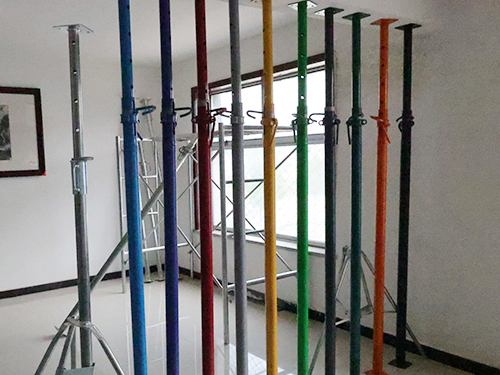
The first job is knowing what to ask for, because the standards are not interchangeable. Adjustable telescopic props are covered by BS EN 1065, which classifies them and defines how capacity is assessed. Scaffold couplers fall under BS EN 74-1 for standard fittings and BS EN 74-2 for specials, with tube covered separately by BS EN 39 or the British BS 1139 family. System scaffolds are assessed as structures against BS EN 12810 and BS EN 12811.
Some products sit outside a dedicated product standard, and pretending otherwise is where confusion starts. Adjustable screw jacks used in shoring, for example, are generally assessed as components within a falsework system under documents such as BS EN 12812 and BS 5975 rather than against a standalone jack standard. A supplier who says "certified to EN" without naming which EN and which part is usually papering over a gap.
Ask for Evidence, Not Assurances
There are four documents worth requesting as a matter of routine. A type test report naming the standard, the class or rating, and the configuration tested. Steel mill certificates to EN 10204, in the 3.1 or 3.2 form where the project requires traceability back to the heat. The factory's quality system certificate, usually ISO 9001. And the ongoing production sampling records for the specific batch being shipped.
Read the test report rather than filing it. Check that the tested configuration matches what is being supplied: same tube diameters, same wall thickness, same thread type, same class. Reports frequently describe a product that is similar to, but not the same as, the one in the quotation. This is the single most effective check an importer can make.
Pre-Shipment Inspection
Inspection before shipment costs a fraction of a rejected container. A sensible inspection covers dimensions against the order, thread fit using a go or no-go gauge, unit weights against the specification, coating thickness measured with a magnetic gauge at several points, weld appearance, and the required markings on couplers and props.
Sampling plans matter here. Randomly pulling a handful of units from the top of a stack proves little, because problems cluster. Sampling to a recognised procedure, such as the ISO 2859 series, across several bundles gives a result that means something. Where the order justifies it, sending samples to an independent laboratory for load or slip testing is the strongest evidence available.
Packing, Marking and Loading
Damage in transit is the most common complaint that has nothing to do with manufacturing. Props should be bundled and strapped to steel rather than to plastic banding that stretches, separated to stop coating wear, and loaded so they cannot shift. Couplers are typically packed in woven bags or cartons of a stated count by weight, which also makes quantity checks on arrival far easier.
Specify marking in the order. Buyer's part code, size, class, and the production period should appear on the product or on durable bundle labels. Ask for container stuffing photographs before the seal goes on. Suppliers who pack properly are generally happy to send them, and the pictures settle any later argument about what was loaded and how.
Shipping Documents and Classification
The standard set is a commercial invoice, a packing list that matches the physical bundles, a bill of lading, a certificate of origin, and the quality documents already mentioned. Inconsistencies between the packing list and the invoice cause more customs delays than any technical issue, and they are entirely avoidable if the factory prepares them from the same source data.
On classification, scaffolding, formwork and propping equipment generally falls within heading 7308.40 of the Harmonized System, which covers equipment for scaffolding, shuttering, propping or pit-propping. Duty rates and any additional requirements vary by destination, so confirm the exact code and treatment with a licensed customs broker rather than relying on what appeared on a previous shipment.
Building a Supply Relationship
Importers who treat every order as a fresh negotiation get treated the same way in return. Sharing a rolling forecast, agreeing a fixed specification once, and giving the factory feedback on what passed inspection and what did not produces better goods over time. It also makes OEM marking, custom packing and reserved production slots realistic options.
The test of a manufacturer is not whether the first sample is perfect. It is what happens after a problem is raised. A factory that investigates, shows the production record, and corrects the process is worth keeping. One that argues about the definition of a bent tube is not, whatever the price list says.
References
BS EN 1065, Adjustable telescopic steel props: Product specifications, design and assessment by calculation and tests, CEN / British Standards Institution.
BS EN 74-1:2005, Couplers, spigot pins and baseplates for use in falsework and scaffolds: Part 1: Couplers for tubes: Requirements and test procedures, CEN / British Standards Institution.
BS EN 12812:2008, Falsework: Performance requirements and general design, CEN / British Standards Institution.
EN 10204, Metallic products: Types of inspection documents, CEN.
 PRODUCTS


 CONTACT
WHATSAPP:+8618630740705
TEL:+8618630740705
Email:331314924@qq.com
Web:https://www.shanchenhardware.com
ADD:Xian County, Cangzhou, Hebei, China